
Carbide slitting saws
What is Solid Carbide Slitting Saws?
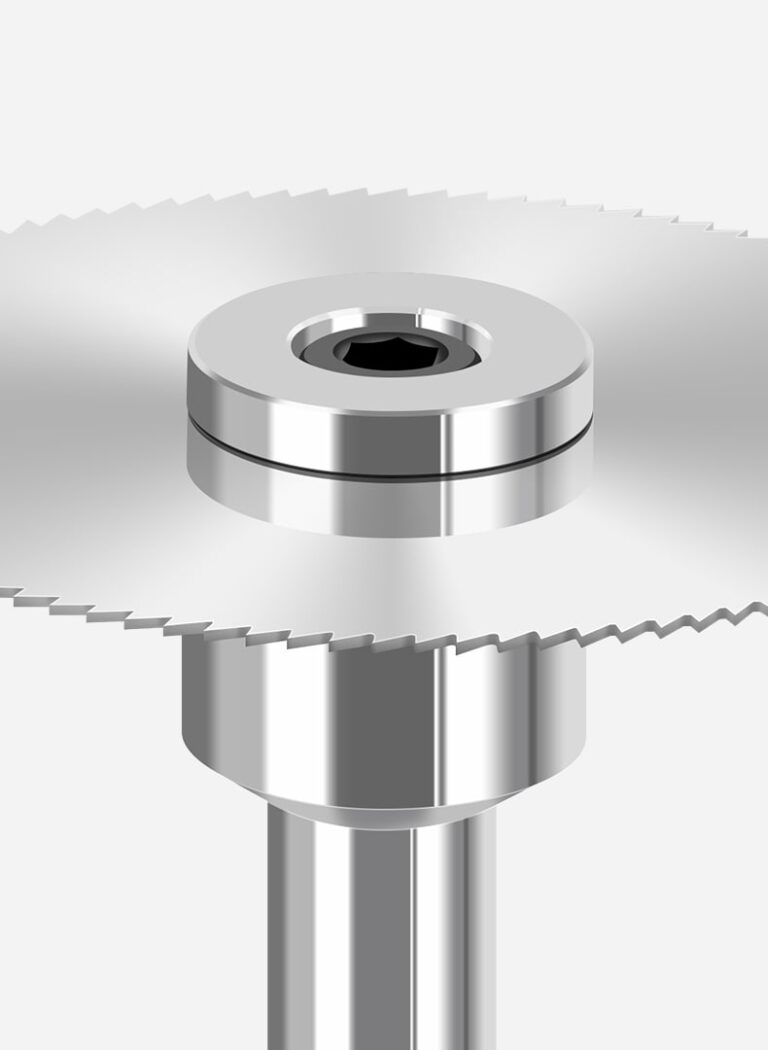
The solid carbide slitting saw, which is made entirely of solid carbide material (also known as ‘cemented carbide’ or ‘tungsten steel’), is primarily used for producing precision slots and cuts with CNC milling machines.
Why Carbide?
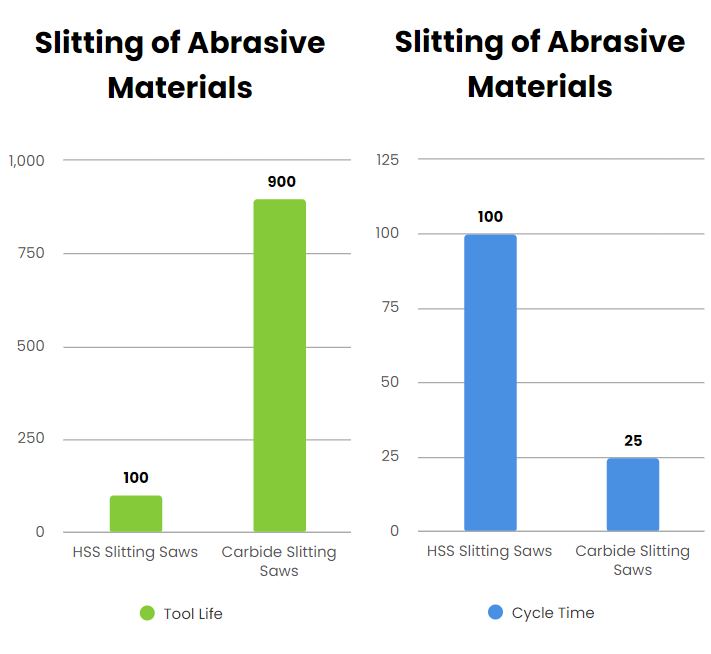
Compared to HSS material, carbide metal saw blades provide longer tool life and decreased cycle times. Furthermore, they offer excellent performance due to their high hardness and long wear life. Consequently, solid carbide slitting saws can achieve high-speed milling and high processing efficiency. As a result, milled grooves are dimensionally accurate and have a good finish, leading to high product quality. Additionally, these saws can be widely used for milling and grooving various materials such as wood, copper, aluminum, and other difficult-to-machine materials, including ordinary steel, hardened steel, bearing steel, stainless steel, and titanium alloy
What material can be cut by solid carbide slitting saw blades?
Aluminum and aluminum alloys
Copper, brass and bronze alloys
Other Non-ferrous metal alloys
Wood/Plastics non-metal
Ordinary steel
Hardened steel
Cast iron
Titanium alloy
ToolingBox TC10/TC20 Series Carbide Circular Slitting Saws:
According to the different applications, ToolingBox can supply TC10/TC20 series circular slitting cutters made from solid carbide materials to our customers across many industries, including woodworking, machinery, light industry, hardware, printed circuits, and glasses industries, among others. Specifically, the TC10 series is designed for cutting wood, plastics, and non-ferrous metals, whereas the TC20 series is intended for steel cutting. Therefore, please feel free to inquire if you have any questions about our slitting blade products.
TC10/TC20 Series
| Carbide Grade | Density(g/cm3) | Hardness (HRA) | Application Materials |
|---|---|---|---|
| TC10 series | 14.0-14.5 | 90 | Non-metals such as plastics, wood and non-ferrous metals such as aluminum, copper and brass, free-cutting materials such as cast iron, mild steel and medium carbon steel |
| TC20 series | 14.6-14.8 | 92.5 | Alloy steel, stainless steel, titanium alloy, etc. after heat treatment |

Axis Slitting Case -Carbide Slitting Saw TC20 Series
| Carbide Grade | Size | Machining materials | Workpiece hardness | Cutting Speed | Tool life |
|---|---|---|---|---|---|
| TC20 series | D80X0.3X6X22X100T | Alloy steel after heat treatment | HRC45 | 80m/min | 200 slots |
Why Us?
The Advantages Of ToolingBox Carbide Slitting Saws
High-quality carbide blanks
Manufactured by high-quality carbide blanks, durable and long tool life
Serrated sharp
The angle of the teeth is specially designed, and the grinding process makes the teeth sharper.
Double mirror finish
The surface of saw blade is smooth within a small tolerance to keep cutting quality and high efficiency.
Multiple specification options
Coarse and fine pitch with Inch and in metric sizes, different thickness can be offered
Selection Steps of Carbide Slitting Saws
01
Select the Outer Diameter
Generally, the outer diameter is selected by the depth of cut(Table 1)
02
Select the Inner Diameter
Find the corresponding inner hole according to the outer diameter (Table 2)
03
Determine the Thickness
Determine the thickness of the saw blade according to the cutting needs (Table 2)
04
Coarse or Fine Pitch?
If you’re working with non-ferrous metals, ToolingBox suggests a Coarse Pitch, and finer pitch saws for ferrous metals.
Table 1 - Selection Reference for Outer Diameter of Slitting Saws
| Cutting depth(mm) | 3 | 5 | 8 | 10 | 12 | 15 | 20 | 30 |
|---|---|---|---|---|---|---|---|---|
| Outer Dia of Slitting Saw(mm) | 40 | 50 | 63 | 70 | 75 | 80 | 100 | 125 |
Table 2 - Corresponding table of size and teeth number of slitting saws
| Outer Dia of Slitting Saw(mm) | Thickness scope (mm) | Inner Dia (mm) | Optional Teeth Z (T) |
|---|---|---|---|
| 16 | 0.2-3 | 4/5/6 | 12/18/24/30/36/40/50 |
| 20 | 0.2-3 | 5/6/8/10 | 18/24/30/36/40/50/60 |
| 25 | 0.2-5 | 5/6/8/10 | 18/24/30/36/40/50/60/72 |
| 30 | 0.2-5 | 8/10/12.7/13 | 24/30/36/40/50/60/72/80 |
| 40 | 0.2-5 | 8/10/12.7/13 | 30/36/40/50/60/72/80/90 |
| 50 | 0.2-5 | 8/10/12.7/13/16/22 | 40/50/60/72/80/90/100/120 |
| 60 | 0.2-6 | 12.7/13/16/22 | 40/50/60/72/80/90/100/120 |
| 63 | 0.2-6 | 12.7/13/16/22 | 40/50/60/72/80/90/100/120 |
| 70 | 0.2-6 | 13/16/22/25.4 | 40/50/60/72/80/90/100/120 |
| 75 | 0.2-6 | 16/22/25.4 | 40/50/60/72/80/90/100/120 |
| 80 | 0.3-10 | 16/22/25.4 | 40/50/60/72/80/90/100/120 |
| 100 | 0.5-6 | 22/25.4 | 50/60/72/80/90/100/120/150 |
| 110 | 0.5-6 | 22/25.4 | 50/60/72/80/90/100/120/150 |
| 125 | 0.5-6 | 22/25.4 | 50/60/72/80/90/100/120/150 |